
MUSIC THERAPY FOR TEENS
Adolescence is a vital, yet complex and often turbulent stage in a person’s development. Due to various contributing factors some may find this transition to adulthood a particularly challenging period in their life and may benefit from therapeutic support such as music therapy.
Teenagers are known to have a natural gravitation towards music. In fact, the average teenager living in the developed world spends approximately two and a half hours per day listening to music. Music is used intuitively by teenagers as:
“a mirror of their public self and as a window of their private selves”. Katrina McFerran, author of ‘music, music therapy and adolescents’
Teens are often quickly drawn into music therapy compared to more traditional talking therapies as it provides a unique and effective way of developing self-awareness and encouraging self-expression and emotional release.
Music therapy can support adolescent health by using music therapeutically to develop a young person’s:
- Identity formation and self-acceptance
- Self-esteem and competence
- Emotional regulation and resilience
- Relationships, sense of belonging, and connectedness

Music Therapy Lambeth provides individual and small group-based music therapy to young people in need of support within their school setting.
Music therapy can benefit students who:
- Struggle with Autism, ADHD and other neurodiverse conditions
- Have learning difficulties or language and communication difficulties
- Experience anxiety, depression and other mental health difficulties
- Have experienced loss or trauma
- Have been through big life changes at school or home (e.g.):
- Bereavement or loss
- Physical or mental illness (personal or in the family)
- Adoption/Foster care system
- Find attending school difficult
- Experience issues around Gender identity
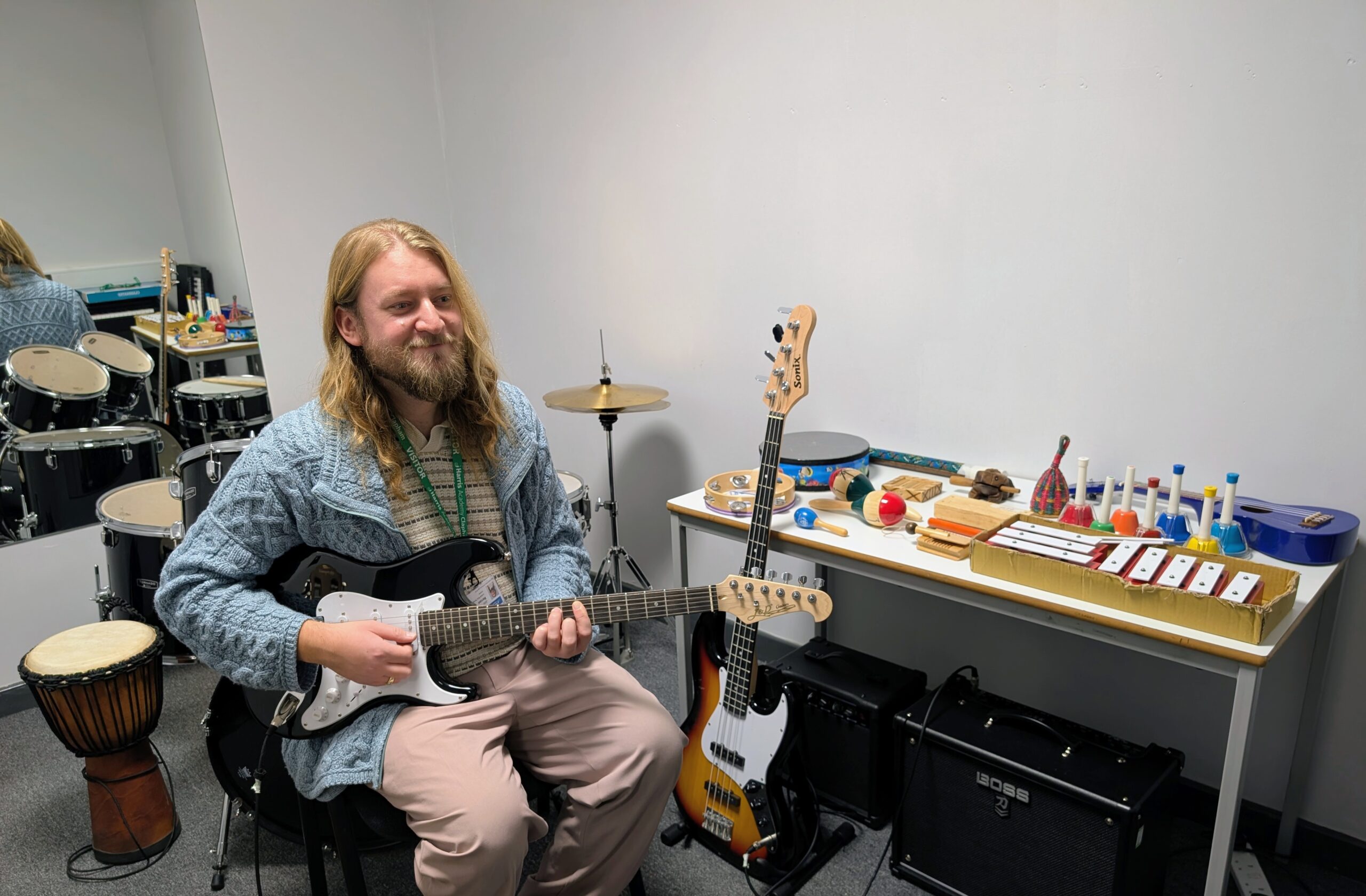
John, our music therapist at Harris Academy, works closely with the safeguarding and Special Educational Needs and Disabilities (SEND) teams. As well as the usual referral routes John has set up a successful drop-in service which gives young people the agency to self-refer, often flagging students in need to the school.
The therapy at Harris Academy is student led and person-centred, facilitating students to reflect and express themselves through verbal and non-verbal means. John also makes use of art and play in sessions, allowing for students to access different creative mediums in the therapy
2 anonymised case examples:

Follow Us!